

 To engineer a successful culture shift that supports and promotes responsible investing, financial institutions, and particularly asset owners, have to not only talk the talk but also walk the walk.
The UN-supported Principles for Responsible Investment (PRI) outlines seven steps asset owners can take to develop a culture of responsible investment. Here are four defining actions that can inspire an entire organization to invest responsibly based on UN PRI:
- Know what you stand for
Never underestimate the value of defining investment beliefs. These beliefs can range from articulating the significance of efficient governance, leadership, and culture, or that the organization should apply long-term thinking to deliver long-term sustainable results, to embedding ESG factors as drivers for decision-making. These investment beliefs set the tone and direction for investing by focusing on the issues that matter most to the organization. Moreover, they can define how an asset owner defines value relative to risk. Ultimately, these beliefs serve as the foundation for practical decision-making in investment strategies and performance objectives.
- Have a strategy and stick to it
A transparent, concise and extensive investment strategy based on investment beliefs will pinpoint and delineate the investment environment and goals. It serves as a roadmap for executives and portfolio management teams to comply with as they turn these beliefs into sound investment practice. Asset owners can use their investment strategy to specify investment mandates so that strategy and asset managers’ approach for delivery align. Areas that asset owners can influence in this regard include: how asset managers manage risk in achieving stated goals, their processes for efficient stewardship, and how they interact with policymakers.
- Embed ESG into everything you do
The clear majority (80%) of last ESG institutional investor survey by State Street Global Advisors respondents answered that they have some form of ESG strategy within their portfolios. For investment beliefs to stick, ESG factors need to cascade into every aspect of investment decision-making. This includes confirming that investment managers have a transparent method of integrating ESG in investment analysis that comprises an approach for prioritizing ESG factors within specific holdings and asset classes, and that they have integrated ESG issues into their investment research, analysis, and decision-making processes. Among investors in ESG institutional investor survey who have an allocation to ESG investments, 17% indicate that 50% or more of their overall investments have exposure to ESG strategies; an intermediate group of 39% indicates that 25–49% of their portfolios feature exposure to ESG strategies; and 44% of respondents have portfolios with ESG exposure of 1–25%.
What proportion of your overall investments incorporates ESG factors? *
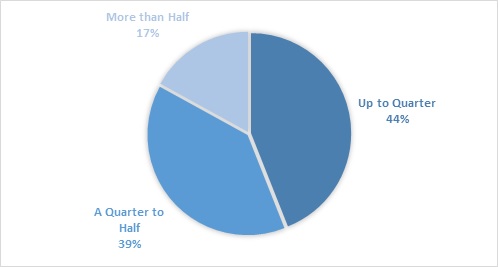
* State Street Global Advisors, ESG Institutional Investor Survey 2017
- Monitor, measure, report, repeat
An old adage says you cannot manage what you do not measure. That is why monitoring and measuring the implementation of investment policies and strategies, and then reporting on it, is critical. Asset owners should be asking asset managers to report regularly on their performance, including their approach to governance, ESG-related research, and public policy engagement. Asset owners will then want to review such performance, to measure success (or failure) at putting responsible investment beliefs and strategies into practice, and take action where improvement is needed.
Investors’ belief in the performance benefits of ESG investing is backed up by high levels of satisfaction among adopters. The vast majority (84%) are satisfied with the financial performance of their ESG strategy, including 31% who are very satisfied. Satisfaction is highest among those firms that have been pursuing ESG investing for the longest and where ESG is most integrated into decision-making. More than two-thirds (68%) say that integration of ESG into decision-making has significantly improved returns.
How satisfied are you with the financial performance of your ESG strategy?
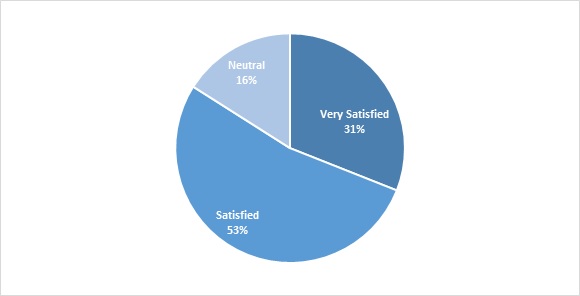
* State Street Global Advisors, ESG Institutional Investor Survey 2017
Asset owners play a significant role in creating the conditions that will allow ESG and responsible investing to grow and develop within the financial community. Their efforts and behavior will produce a more sustainable financial system.
However, for responsible investment to be truly successful, the entire financial community, from investment managers to consultants and advisors, need to enthusiastically accept and follow the investment beliefs asset owners set, and uphold the core values upon which these beliefs are based.