
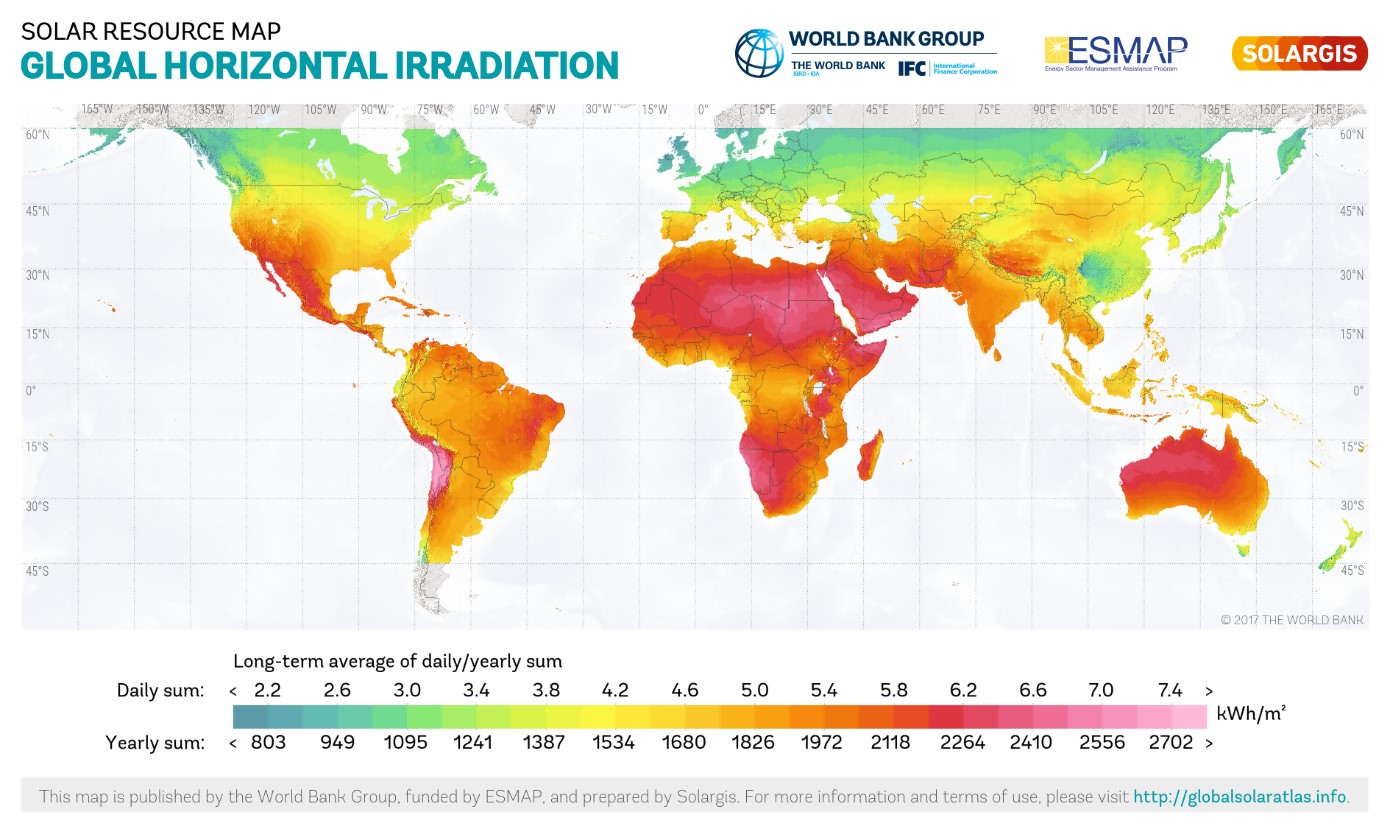
Despite both regions Middle East and Africa has amazing solar energy potential, they lag far behind the world’s more developed countries in terms of installed capacity. Israel, is the largest solar energy producer in the Middle East with 881 MW, only enough to make number 25 in the world. South Africa is the largest generator in Africa with 1,120 MW, making it the world’s 20th biggest generator.
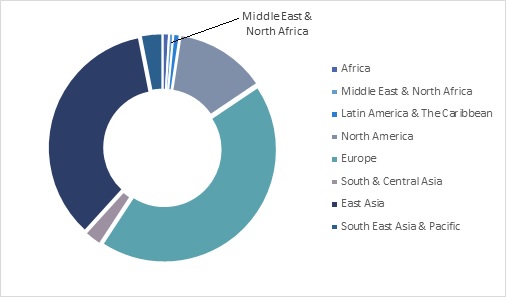
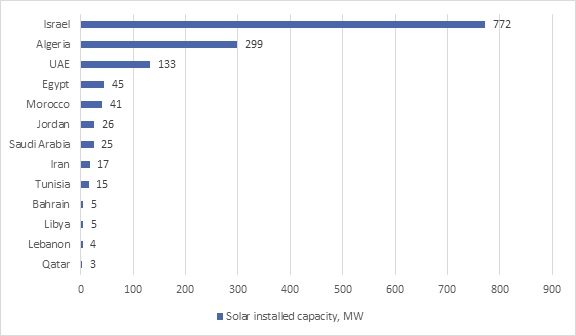
Total installed solar capacity for the MENA was in 2016 1.39 GW, representing 0.6% of the world’s solar generating capacity. Top countries per solar installed capacity include Israel (772 MW), Algeria (299 MW), United Arab Emirates (133 MW), Egypt (45 MW), Morocco (41 MW), Jordan (26 MW), Saudi Arabia (25 MW) and Tunisia (15 MW).
In 2016 Saudi Arabia announced a national plan – Saudi Vision 2030 – aimed at diversifying its economy away from oil. Saudi Arabia and Japan’s Softbank have agreed to build the world’s largest solar power project, with plans to spend US$200bn by 2030. Softbank CEO Masayoshi Son signed an memorandum of understanding with Crown Prince Mohammed bin Salman that aims to build a series of solar projects throughout Saudi Arabia with a capacity of 200 GW, which is enough to power 150m homes. Commenting on the solar deal, Prince Mohammed told reporters: “It’s a huge step in human history. It’s bold, risky and we hope we succeed doing that.” The project seeks to create 100,000 jobs and save US$40bn in power cost by switching oil for solar.
United Arab Emirates is also pushing for PV systems more than for CSP due to the latter’s higher costs. The largest solar project is the 100 MW Shams 1 CSP project in Abu Dhabi, and the construction of the 1000 MW Mohammed Bin Rashid Al-Maktoum Solar Park in Dubai has already started.
Morocco has a very ambitious renewable energy generation target of 52% by 2030, with solar taking up a third of the share. One of the most important solar projects is the largest CSP power plant (built in 3 phases/plants) in the world located in Ouarzazate. The first plant, 160 MW Noor 1 was completed in 2016, with the other two, totalling 350 MW was completed in 2018.
Algeria is planning to diversify its energy sources and increase the exploitation of its huge solar potential by adding 13 GW of capacity by 2030. Both PV power plants and CSP are being developed, with 20 PV projects located in the High Plateaus and Southern regions, totalling 343 MW.
Israel is targeting to have 13% renewable electricity production by 2030, 50% of which will come from solar energy. The major projects commissioned are 55 MW Halutziot and 40 MW Kentura Solar. Most of the solar installations in the country are PV systems.
Solar energy is expected to continue the growth trends in the region, as there is a growing energy demand and an interest to increase solar capacity and diversify power sources.